
How does SCS work?
You feel pain when your nerves send pain signals to your brain through your spinal cord. Your SCS System is designed to interrupt those signals, so you don’t feel them as pain.
The SCS System is made up of a stimulator and leads, which are placed in your back. The stimulator sends mild pulses through the leads. These pulses interrupt pain signals on their way to your brain.
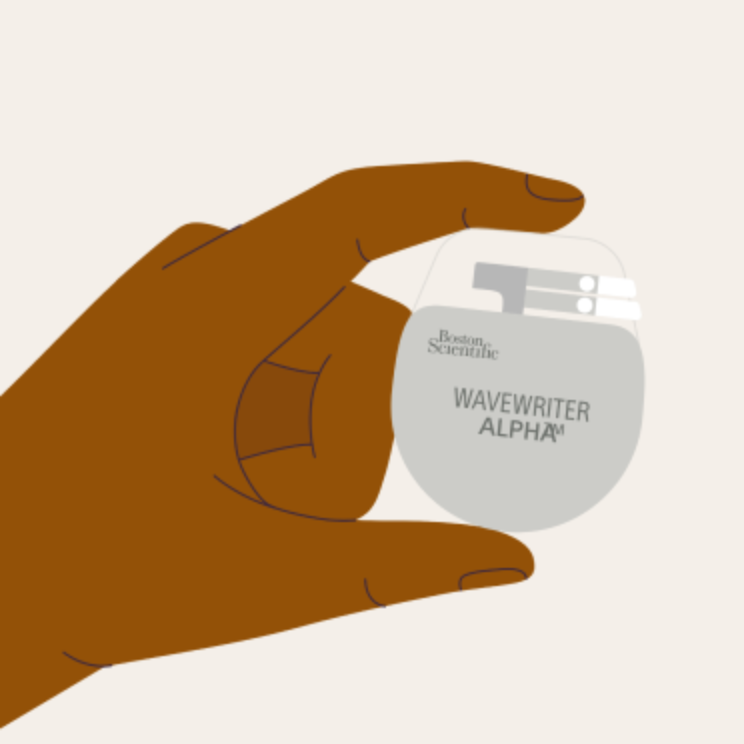
Stimulator
A small device called a spinal cord stimulator is implanted under your skin.
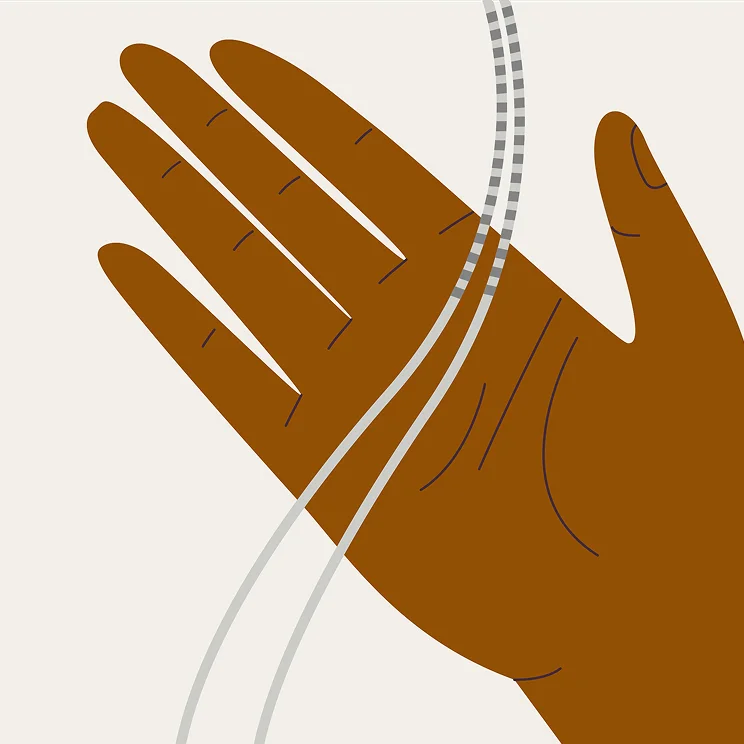
Leads
Thin, flexible leads are connected to your stimulator, and placed near specific nerves in your back.
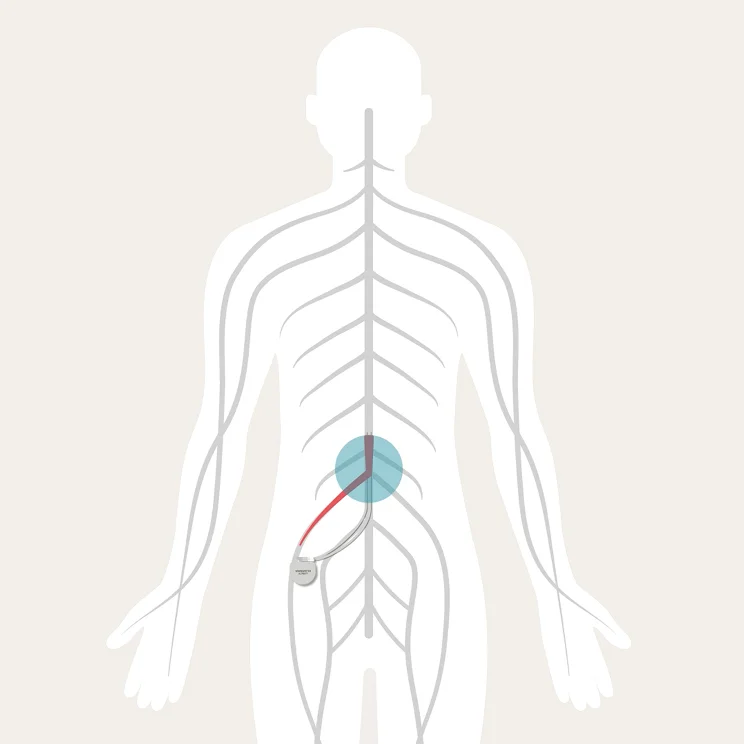
Pulses
Your stimulator sends mild pulses through the leads to your nerves. The pulses interrupt the pain signals on their way to your brain, before you feel them.
See the proof
Clinical studies and trials have shown that SCS is effective in relieving chronic pain.

100K+ people treated
Over 100,000 people across the globe have found pain relief from Boston Scientific SCS therapy. Relief that’s long-term, drug-free, FDA-approved, and effective.

90% success rate in trials
More than 90% of Boston Scientific SCS trial participants reported a successful experience and decided to get the permanent implant.1

95% would recommend
9 out of 10 Boston Scientific SCS patients said they were satisfied with their therapy. 95% would recommend it to others.1
What to expect from Spinal Cord Stimulation (SCS)
SCS is designed to help you get long-term pain relief in different parts of your body. You can test drive SCS in a short trial. If your trial is successful, your pain management specialist can help you get a permanent implant.

Interrupting the Pain Pathway
Pain travels through your nervous system as electrical signals. SCS technology places small, medical-grade leads near the spinal cord. These leads emit a gentle, specialized electrical field that masks or blocks the pain signals before your brain can perceive them.
Instead of sharp, chronic pain, many patients feel a soothing sensation (paresthesia) or nothing at all in the affected area.